How to price a bathroom renovation in New Zealand
How NZ builders price a bathroom reno: your own scope, the trades as allowances, fixtures, labour by stage, consent, asbestos and what to exclude.
Last updated
Price your own scope in detail, carry the trades and fixtures as labelled allowances, and write down what each one covers. When something turns up behind the linings, that is what protects you.
Whose price is it?
| Part of the bathroom | Whose price | Until you have it |
|---|---|---|
| Strip-out, framing, floor, wet-area linings, nogs, fitting off | Yours | Price it line by line |
| Plumbing and electrical | The plumber's and electrician's | Provisional sums |
| Tiling and waterproofing | The tiler's and waterproofer's | Provisional sum |
| Fixtures the client picks | The client's choice | Stated allowance |
Allowances are placeholders until the trade gives you their own price. Say in the quote what each one covers.
What does the builder price in a bathroom renovation?
The strip-out and disposal; framing repairs and any changes; the floor, if you are replacing it: new plywood and a tile underlay, or underlay only over a sound timber floor; the wet-area linings on the walls and ceiling; the nogs behind every fixture; fitting the vanity, toilet and accessories; the door, architraves, skirtings and silicone; and the clean-up.
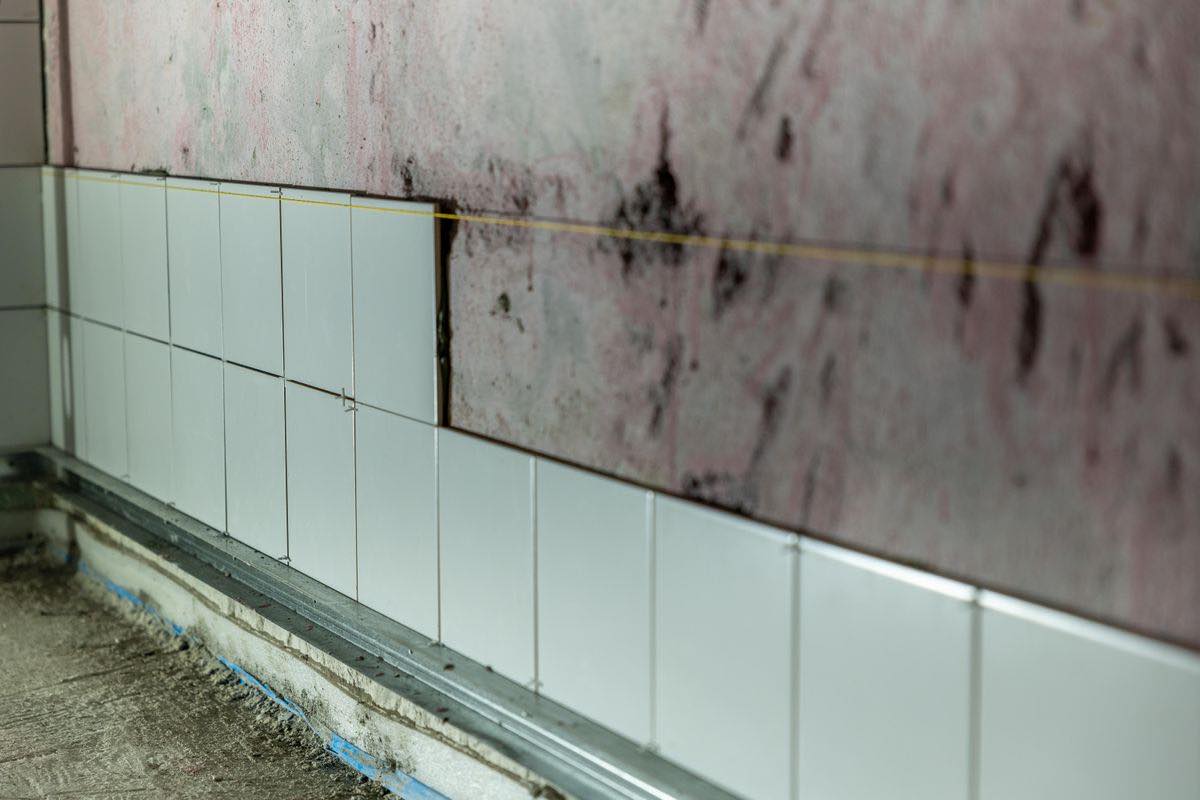
Put a nog behind every fixing point before the linings go on: the toilet, each vanity, the shower, the bath and every towel or grab rail. They are cheap to put in now and hard to add once the linings are on.
If a wall is coming out or a new opening is going in, that is framing (a lintel and studs) and a B1 (Structure) matter to take from your plans or an engineer.
The free GIB calculator is there to help you check the lining quantity.
What goes to the trades?
Carry plumbing and electrical as provisional sums until you have the trades' own prices. Plumbing covers the rough-in, the floor waste and the tempering valve; electrical covers the circuits, lighting, a heated towel rail and the extract fan, which has to be ducted to the outside under clause G4, not into the roof space. Check the tempering-valve requirement under NZ Building Code G12 with your plumber and keep it on the plumber's price.
Tiling and waterproofing go together. The waterproofing system (membrane, primer, bond breaker and sealant) sits with the tiler or a waterproofer, applied by an approved applicator who can give you a producer statement (PS3) for it. Wet-area waterproofing is an E3 (Internal moisture) matter. The free tile calculator counts tiles and adhesive for a floor or wall.
Moving plumbing moves money. A layout that puts the toilet, shower or basin somewhere new changes the plumber's price, so ask before you quote whether anything is moving.
How should you handle fixtures?
As an allowance, unless the client has already chosen them. The vanity, toilet, tapware, shower enclosure and accessories depend on the client's choices, so carry them as a stated allowance and say what it covers.
The finish level changes the fixtures, not your framing and lining hours. A premium bathroom costs more because of what goes into it, not because the GIB takes longer to hang.
How do you work out the labour on a bathroom?
By stage: framing repairs, the new floor, the tile underlay, lining the walls, lining the ceiling, the fit-out, the door and trims, and the clean-up and snag list. Each scales with different things: the floor with its area, the linings with the wall and ceiling area, the fit-out with the number of fixtures.
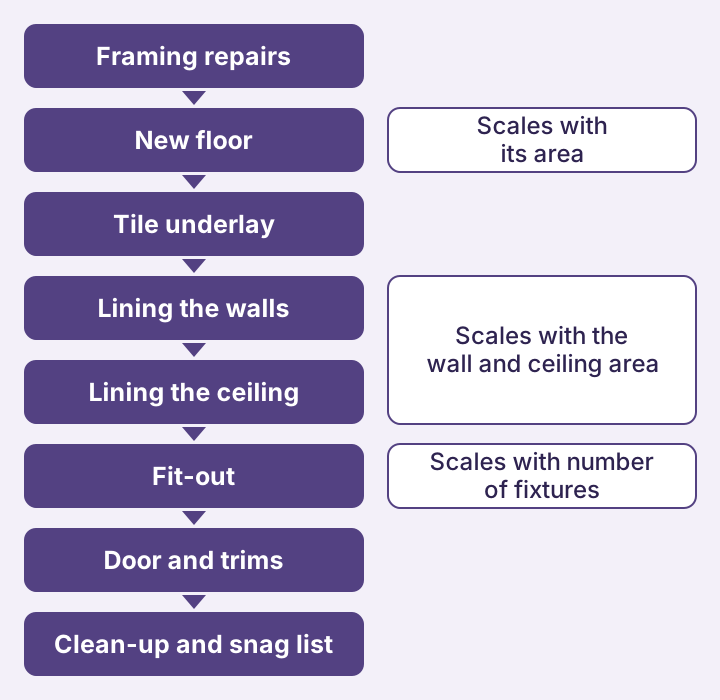
Then adjust for the site and the crew. Difficult access changes how long the same bathroom takes, and some stages (lining a ceiling is the obvious one) are not a one-person job.
Does a bathroom renovation need building consent?
It depends what changes. Replacing fixtures like for like in the same positions often does not. New or relocated plumbing or drainage, a new wet area, and structural changes such as removing a wall commonly do. Check with your council before you quote, and allow time in the programme for processing and inspections if consent is needed.
Keep consent fees out of your price unless you have actually priced them, and say so.
What about asbestos and older houses?
In a house built before 2000, assume there could be asbestos (in materials such as old linings, vinyl or adhesives) until a survey says otherwise, and arrange that survey before anything is stripped. Keep it and any removal out of your price unless you have priced them. The free asbestos risk tool walks through the questions.
Older houses also hide rot. Water damage behind a shower or under a bath only shows once the linings are off, so it belongs in the quote as a stated provisional sum or a named variation, not a surprise.
What about a level-entry shower?
Price the set-down, not just the tiles. A level-entry shower means dropping the floor under the shower, and on a timber floor that can mean cutting or notching joists: a B1 (Structure) matter to confirm before you commit to it. The shower former is typically the plumber's supply; the floor work is yours.
What should a bathroom quote exclude?
Say what is in each price and what is in none of them. Commonly excluded or carried separately: fixtures, tapware and the shower enclosure (an allowance); tiling and the waterproofing system (the tiler's price); plumbing and electrical (provisional sums); accessories themselves, as opposed to the nogs behind them; asbestos testing and removal; lead paint; underfloor heating; and the admin time of running a consent.
Hidden conditions go in the assumptions: rot, failed old waterproofing and out-of-true framing are all found only once the linings are off.
Can software price a bathroom for me?
CostMate builds a bathroom estimate from the room size, ceiling height, fixture mix, demolition and floor you enter: the builder's materials and labour by stage in the total, and plumbing, electrical, fixtures and tiling as separate allowances, with the exclusions. Materials are priced from Dayle ITM and PlaceMakers trade pricing or your own supplier pricing, and there is a free plan with no card to start.
The trade allowances are placeholders until the trades give you their own prices, so put their numbers in before you send it.
Already priced a bathroom another way? The free Quote Checker is there if you want a second look at a quote, and it needs no sign-up.
Before you quote, confirm the trade prices with your trades, the consent position with your council, and anything structural against your plans or engineer.
Price your own bathroom renovation job Free to start. No credit card required. Start free