How to price a pergola in New Zealand
How NZ builders price a pergola: posts, beams and connections, labour by stage, hold-down, the Schedule 1 consent exemption and what changes once it is roofed.
Last updated
Settle one thing first: is it roofed? It changes both the price and the consent position. Then price the pergola from the ground up: posts and footings, the beams and rafters, the connections that hold it together, and a roof only if it has one. Work out the labour by stage and write down what is left out.
What goes into a pergola quote?
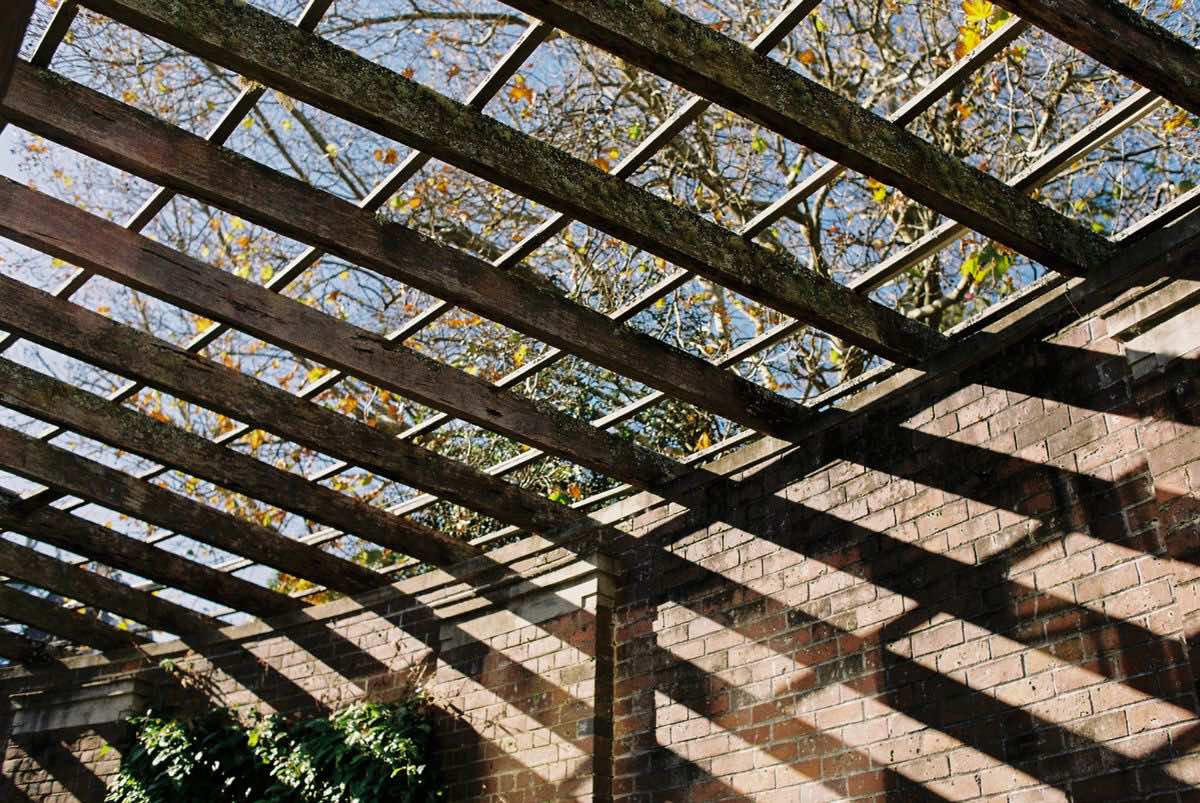
Start with the posts and how they are fixed. Posts concreted into the ground need an in-ground treatment grade (H5 for timber) and footing concrete; posts bolted to a bracket on an existing slab or hardstand need the bracket instead of a footing, and a lower grade (H4). Then the beams, usually doubled along the two long sides, and the rafters across the short span.
Count the connections separately, because they add up: a bolt and washer at every beam-to-post joint, nails at every rafter bearing, and straps where the beam needs holding down. If the pergola is roofed, add purlins, the roof sheets (polycarbonate or steel long-run) and the roofing screws.
Then the parts that are easy to forget: site setup, sundry fixings, clean-up and disposal, a concrete mixer when the posts go in the ground, and an auger if there are a lot of holes. The post hole calculator works out concrete per post, and the cut list calculator turns the pieces into stock lengths to order.
How is the frame sized?
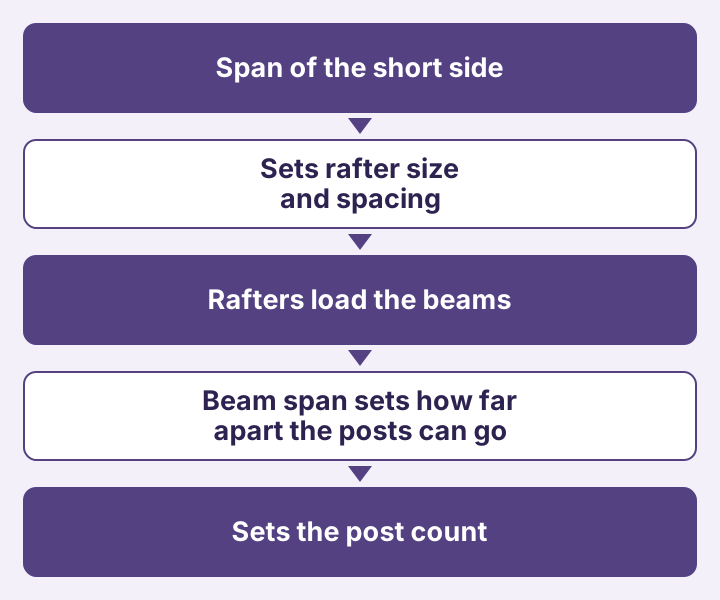
One decision leads to the next. The roof members span the short side, so that span sets the rafter size and spacing. The rafters load the beams, the beam's span sets how far apart the posts can go, and that sets the post count. Let the beams run a little past the end posts.
Member sizes, post spacing and footings are B1 (Structure) decisions. Take them from your plans, your designer or an engineer rather than from habit, and pay particular attention to hold-down: a roof open to the wind has to be held down as well as held up, so the footing and the connections need to resist uplift, not just carry weight.
How do you work out the labour on a pergola?
By stage. Set-out, digging and pouring footings, setting the posts plumb, fixing the beams, rafters and purlins, bracing and connections, roof sheets if it is roofed, then clean-up. Each stage scales with something different: posts, metres of beam, the number of rafters, the roof area.
Then adjust for the job. Difficult access, winter weather and the size of your crew all change how long the same pergola takes. Footings, posts and beams are two-person work even on a small job, so a solo price needs a second pair of hands allowed for somewhere.
Does a pergola need building consent?
An open pergola usually does not. Exemption 6 in Schedule 1 of the Building Act 2004 covers building work on a pergola, attached to a building or freestanding, with no size limit, as long as it is not roofed.
Put a roof on it, even clear polycarbonate, and it is treated as a veranda instead. MBIE's guidance puts verandas up to 20 square metres under their own exemption, 20 to 30 square metres under an exemption that needs a Licensed Building Practitioner or a Chartered Professional Engineer involved, and anything larger into building consent. Close it in with walls and it is no longer a pergola at all.
Exempt work still has to comply with the Building Code, and the district plan still applies. Check with your council before you quote a roofed or large pergola, and keep consent fees out of the price unless you have priced them.
What changes when it is attached to the house?
The fixing to the house becomes its own piece of work: the penetration through the wall or roof, its flashing, packing off the cladding, and making good. It is easy to leave out of a price built around a freestanding frame, so price it or exclude it in writing, and confirm the detail against E2/AS1 and the bracket manufacturer's instructions.
What about fixings near the coast?
Within about 500m of the coast or a harbour, move the bolts, washers, straps and nails to stainless and the roofing screws to a coastal-rated grade, per clause B2 (Durability). It changes the price of every connection on the job, so check the grade against B2/AS1 and price it from your supplier.
What should a pergola quote exclude?
Write the exclusions down. The usual ones: electrical work and lighting; painting, staining or clear-finishing, unless you have priced it; gutters, spouting and downpipes on a roofed pergola; screens, blinds, shade sails and retractable covers; resource consent and any building consent fee; delivery and cartage unless it is its own line; concrete pumping where the truck cannot reach; and the fixing to the house if you have not priced it.
A shade sail is a separate job with its own fixing points and tensioning. Quote it with your supplier or installer rather than folding it into the frame price.
Can software price a pergola for me?
CostMate builds a pergola estimate from the size, height, post material, fixing method, roof type, access and site conditions you enter: the frame and connections line by line, the labour by stage, and the exclusions, priced from Dayle ITM and PlaceMakers trade pricing or your own supplier pricing. There is a free plan and no card to start.
Written the pergola quote already? The free Quote Checker is there for a second look, no sign-up needed.
Before you quote, confirm member sizes, footings and hold-down against your plans or engineer, and consent against Schedule 1 and your council.
Price your own pergola job Free to start. No credit card required. Start free